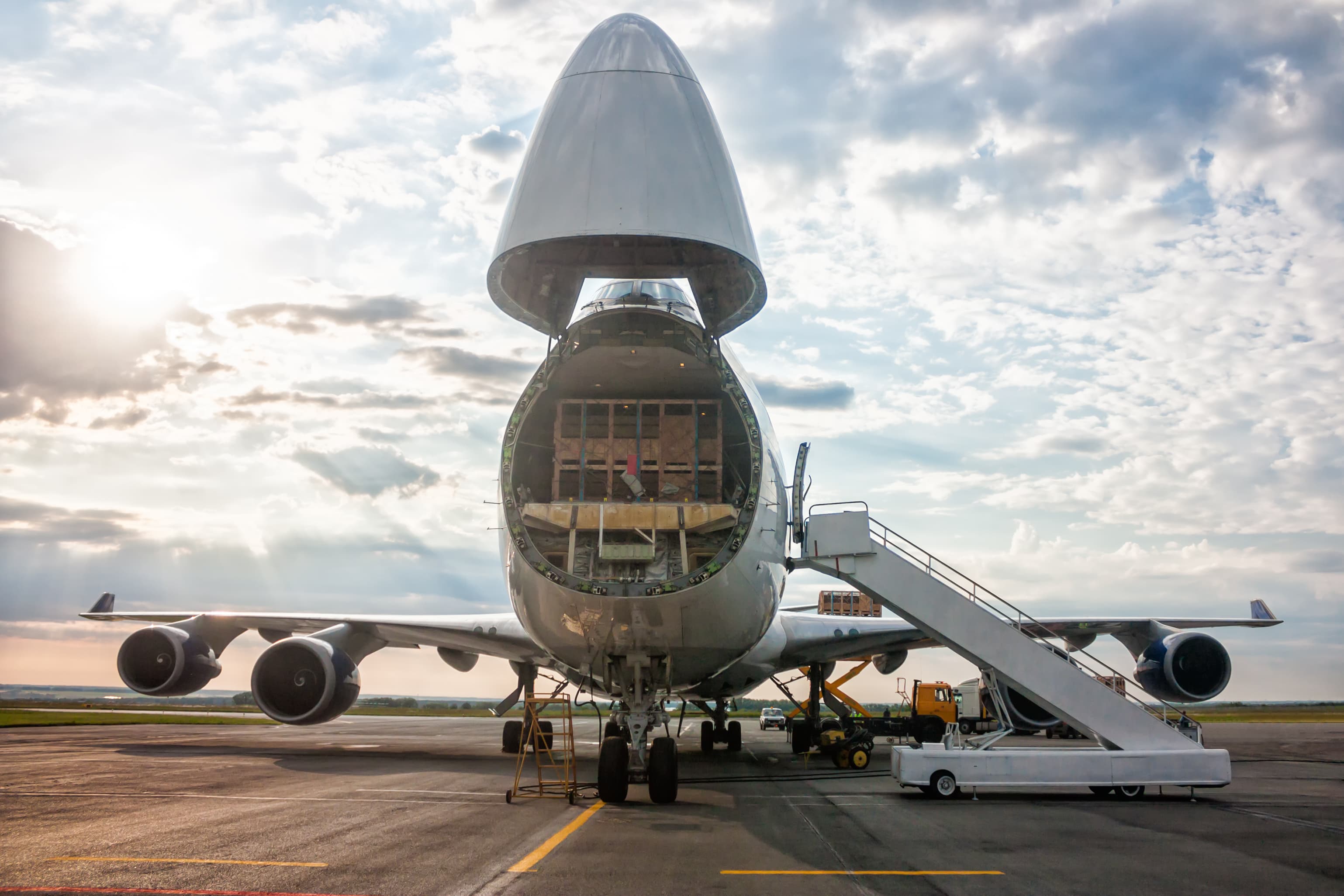
The aircraft had been accepted, the main deck loader confirmed and the handling team made available, so on paper, the station appeared ready.
Yet confirmation alone does not establish capability. The loader may not be suitable for the aircraft configuration, the team may have limited experience with the planned cargo, or the available stand may not provide enough space to position equipment and move ULDs safely.
Every answer may technically be "yes," while the operation itself remains exposed.
This is one of the challenges of planning cargo missions through new or unfamiliar stations. Readiness is often evaluated through a list of available services, even though the real question is whether those services can work together for the specific aircraft, cargo, schedule and operating environment involved.
Several common confirmations therefore deserve a closer look.
"We can handle the aircraft"
A station’s acceptance of an aircraft type confirms that the aircraft can operate there, but it does not necessarily confirm that the complete cargo activity can be performed around it.
The allocated stand must provide suitable access to the cargo doors and enough space for loaders, dollies, transporters, personnel and ULD movement. Surface conditions, aircraft orientation and local restrictions can also affect how the operation is executed.
The aircraft may be able to park safely while the surrounding space remains unsuitable for the planned loading activity.
"We have a main deck loader"
Equipment availability is frequently treated as confirmation of operational readiness, although the presence of a loader provides limited assurance without understanding its suitability and condition.
The equipment must interface correctly with the aircraft, support the expected cargo profile and remain available during the required operating window. Its value also depends on qualified operators and a credible response if the equipment becomes unserviceable.
A contingency that has not been assessed against a realistic recovery time remains an assumption rather than a reliable alternative.
"We handle cargo aircraft regularly"
General cargo experience does not automatically translate into familiarity with every aircraft configuration, loading sequence or cargo profile.
A team may perform routine cargo operations effectively while having limited recent exposure to main deck freighters, oversized loads or missions requiring specialist restraint and loading knowledge. Training records provide useful evidence, but they do not always reveal how recently that knowledge has been applied in practice.
Operational competence must therefore be considered in relation to the mission being planned, particularly when the margin for adjustment during the turnaround will be limited.
"The cargo can be loaded"
Cargo may fit within the aircraft’s dimensional limits and still present significant practical challenges.
Heavy, oversized, sensitive or unusually shaped loads can introduce requirements that affect how the cargo is received, prepared, moved through the warehouse, transferred to the ramp, positioned onboard and restrained. The same considerations apply at destination, where the necessary equipment and expertise must be available to reproduce the unloading method.
Loadability is not determined only by whether cargo fits inside the aircraft, but by whether its complete journey can be executed safely and practically.
"Everyone has been informed"
Cargo missions often involve the operator, handler, warehouse team, loadmaster, flight crew, equipment providers and local authorities, all of whom may hold different parts of the operational picture.
While information may be widely distributed, responsibility can still remain unclear. The operation must establish who is leading the loading activity, who can approve changes, how revised information will be communicated and who has the authority to act when the original plan no longer applies.
Effective coordination is not measured by the number of people included in an update, but by whether the correct information reaches the person who can make the right decision.
Readiness requires more than confirmation
Station readiness is rarely undermined by one obvious limitation. More often, risk develops through several assumptions that were accepted without being examined in the context of the actual mission.
"Available" does not always mean suitable, "experienced" does not always mean experienced with this operation, and "confirmed" does not always mean verified.
A station assessment should therefore do more than record equipment, personnel and services. It should determine whether the complete support model can function under real operating conditions, including when equipment fails, information changes or the planned sequence cannot be maintained.
USAWA supports cargo operators and operational partners with station assessments, loadmastering, special load management, training and operational coordination. By combining advance preparation with practical onsite expertise, we help identify capability gaps before they affect the mission.
Because a new station should not become the first place where the operational plan is tested.